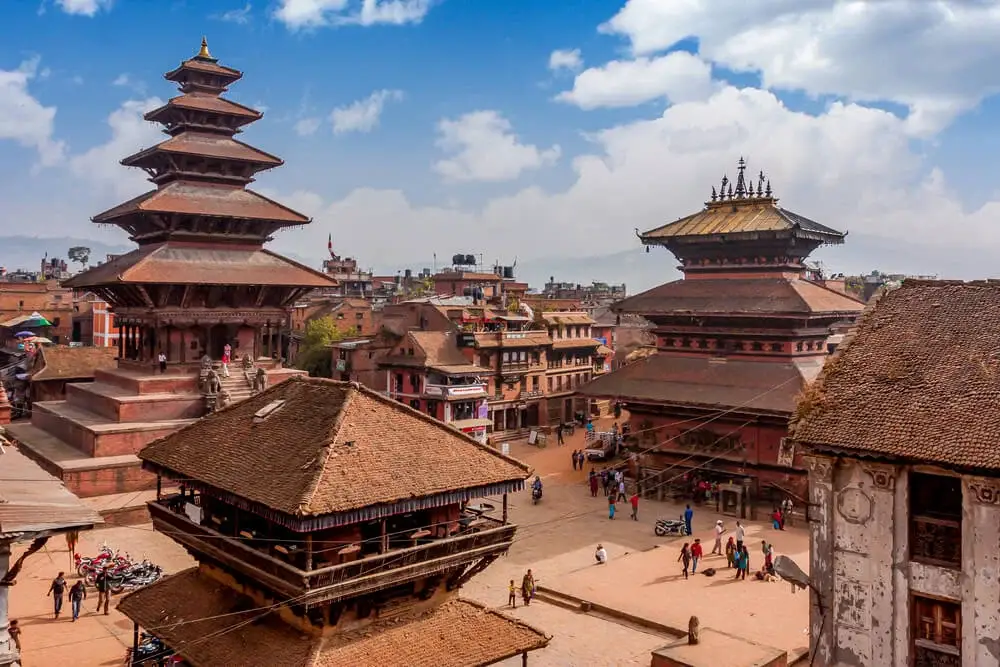
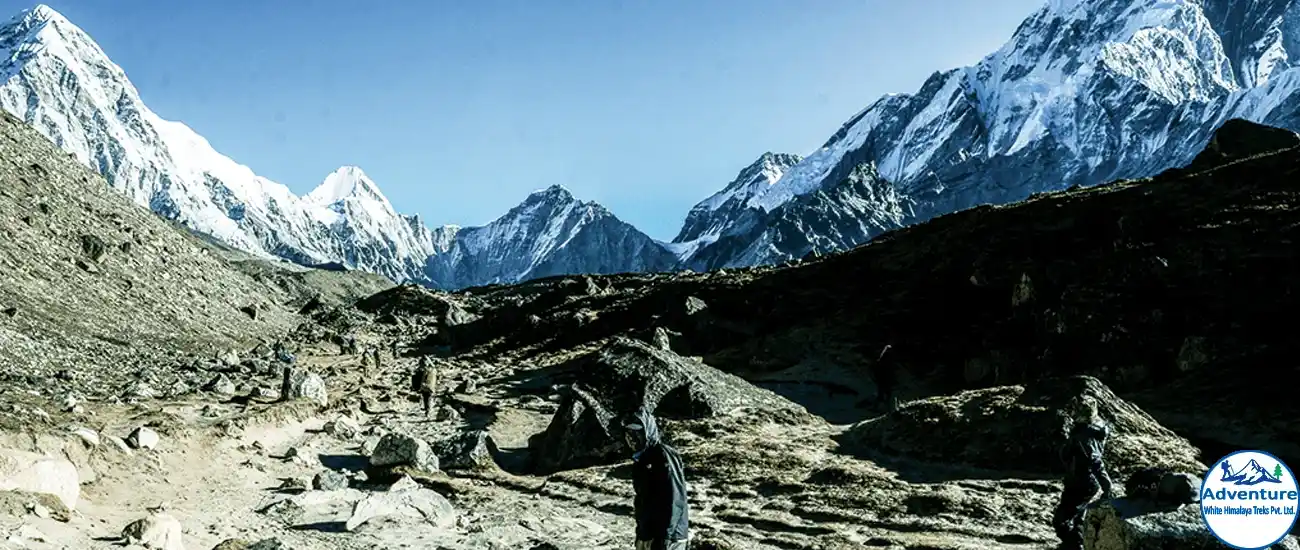
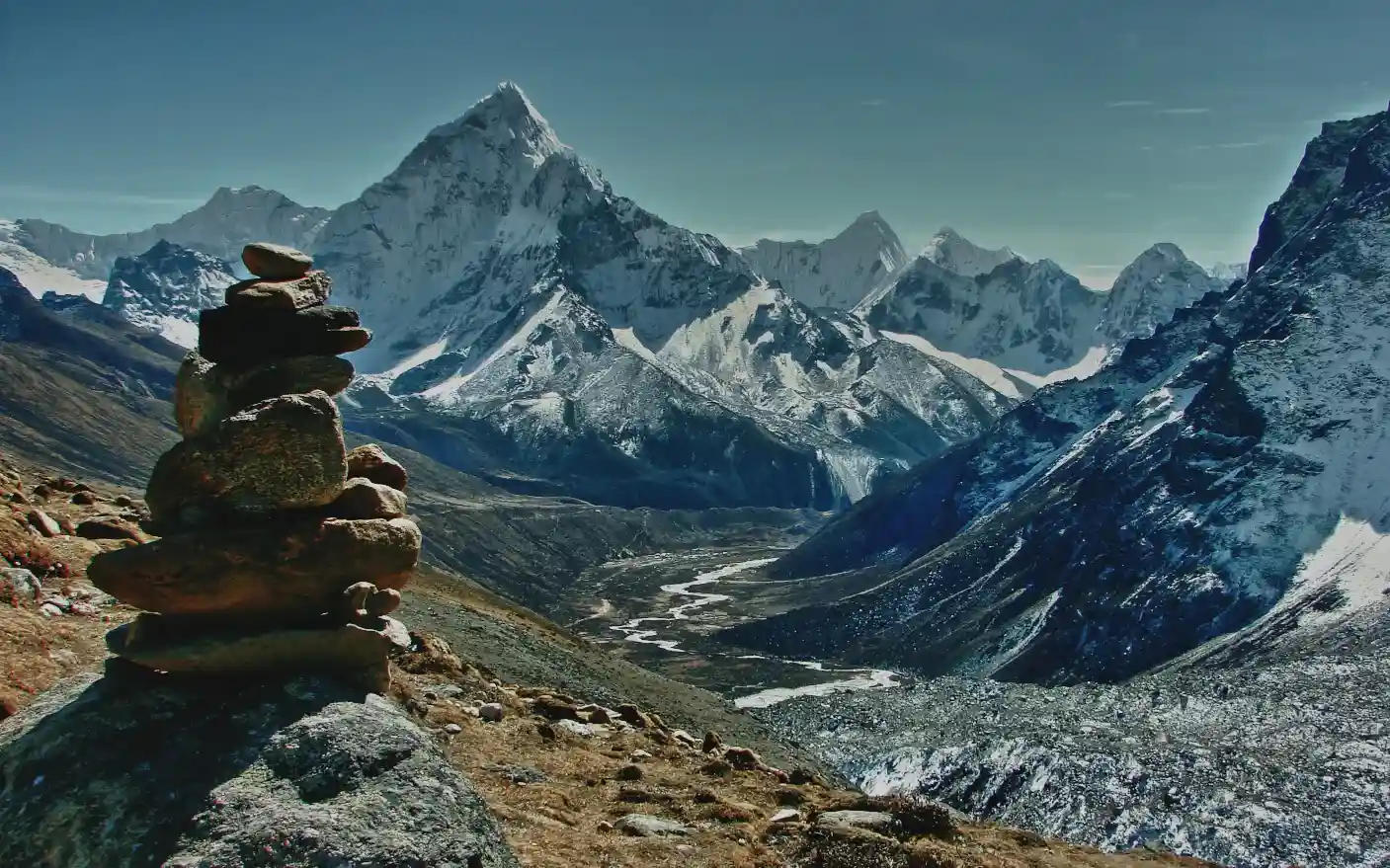
What are the things you consider while traveling and exploring nepal culture in a certain place..?? – cost of travel, best season to travel, and safety. RIGHT?? Nepal has always been the choice for the people who actually know the value of nature and travel. Being a country which is an ultimate package for travelers. Be it adventure, nature, spirituality, peace, or architecture, Nepal has always been able to top the boards. But what about the people living here..??…Well Nepalese people are the most beautiful, welcoming, and friendly nationality, you will ever meet in your life.
Nepal: Country of Gorkhalis
Nepal is the oldest country in the Asia continent. It has a huge treasure of about the initiation of human civilization, many mythological stories and its vast history. Nepal is known to be the country of brave Gorkhalis. Nepal has never initiated any form of war but when the East India Company- the British tried to conquer it, the brave Gorkhalis and our great martyred forefathers had stood for our country. I had always been writing as a travel blogger but writing about the brave Gorkhalis is a privilege to me and it gives me immense pleasure to say this.
Nepal and Nepali People: Unity In Diversity
Nepal and Nepali people have always portrayed unity in diversity. Being a secular state, Nepal has several religions and 126 ethnic groups. Each of them has its unique set of customs, traditions, and cultures. Be it the costumes traditions or festivals that we celebrate, there is a wide range of variety in that too. There used to be discrimination between the then-called lower caste and the upper caste but now people have become more aware of equity. If you ever get to Nepal, all you will see is brotherhood and unity.
Nepali people have time and again the importance of togetherness. Being divided into the three regions- Himalayan, hilly, and terai, we Nepali people believe that we all are the same. A Muslim donates blood to a Hindu, a Hindu brings a Christmas tree to his house, a Buddhist saves a Muslim in an earthquake while a Christian funds the education of a Hindu’s child. This is how Nepali people are.
Not only the Nepali, we people are equally welcoming to the group of people who admire the beauty of our country and enjoy indulging in our culture and customs. People are kind and have big hearts. People are extremely friendly and are respectful towards the nationalities of the other country. If they are celebrating the festival of color- Holi they will make sure that you celebrate it too. If they are carrying the chariot at the famous local festival in Kathmandu-Rato Machindranath, they will make sure that you are carrying it too.
Conclusion of Nepal Culture
Being a teenage girl, I often get questioned about the torn jeans that I wear. I remember while I was walking across the Basantapur durbar area with my grandfather, we saw two beautiful Americans wearing the traditional kurta- Surwal and he told me about the importance of our culture and how to respect it. They looked absolutely gorgeous while wearing that kurta and it made us so happy to see them that way. You will be treated like you are treated in your home when you get here. In Nepal, the total population is almost 3 crore around has diverse cultures and festivals. The stunning view always helps to describe the beauty of natural resources. Including Mount Everest which represented Nepal in the world.
If you are planning to visit Nepal, please feel free to contact us. Explore our travel packages.
Journey Through Nepal: Birthplace of Buddha – Lumbini
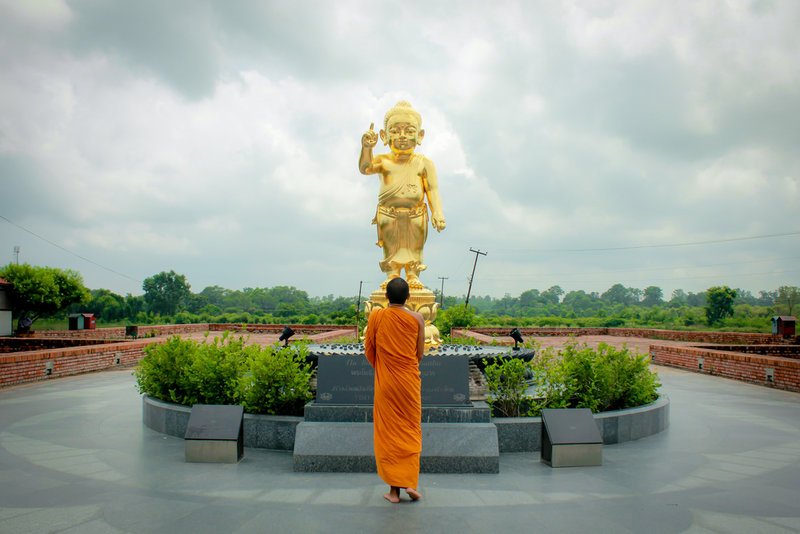
Known as the Light of Asia -Lord Gautama Buddha was born in Lumbini, birthplace of Buddha Nepal. Nepal not only being a rich country in terms of nature country also holds a very strong history and has spiritual and mythological values as well. Being a country that has never participated in any of the two world wars has always supported the mantra of peace and brotherhood. The birthplace of Buddha is to be the oldest country in South East Asia and it has given birth to so many legendary stories and people who visit Nepal feel like they have landed in a spiritual place.
Overview of the Birthplace of Buddha –Lumbini
Initially known as the prince to the Shakya king Suddhodhan and his queen Mayadevi, Lord Gautam Buddha was always sensitive regarding the people around him. His kindness and humbleness were the traits that he was going to be a great personality whom the world would worship. He never showed any behavior of what a king was supposed to be like. He enjoyed being treated as a normal child.
When I was a kid, I heard a story of how he saved the life of a bird. An astrologer had already said that Siddhartha Gautama would never be the way his father wanted him to be like. So he was never allowed to go out of the palace. Even his education was done inside the palace.
But one fine day, he asked to go around and see what it is like to be out of the palace. There he saw sorrow, people crying, and people dying. This made him curious as he was never exposed to all these things. This created a great impact on his mind and soul so he decided to get rid of all the royal satisfaction and search what life is and how to deal with it. His meditation and his sayings started becoming famous among the people, he was able to change the viewpoint of many people, and finally, he was worshiped as a god.
Now let’s get back to how his birth took place. On the day of Baisakh Purnima, the full moon that occurs in May, Queen Maya Devi roams around her garden, after that, she takes a bath in the pond called, Pushkarini which is now considered a sacred pond After that she takes the support of a tree and gave birth to her son, Lord Gautama Buddha. The history is really interesting and now Lumbini has become a center of attraction for the Buddhist community.
People from all over the globe come here in search of peace.
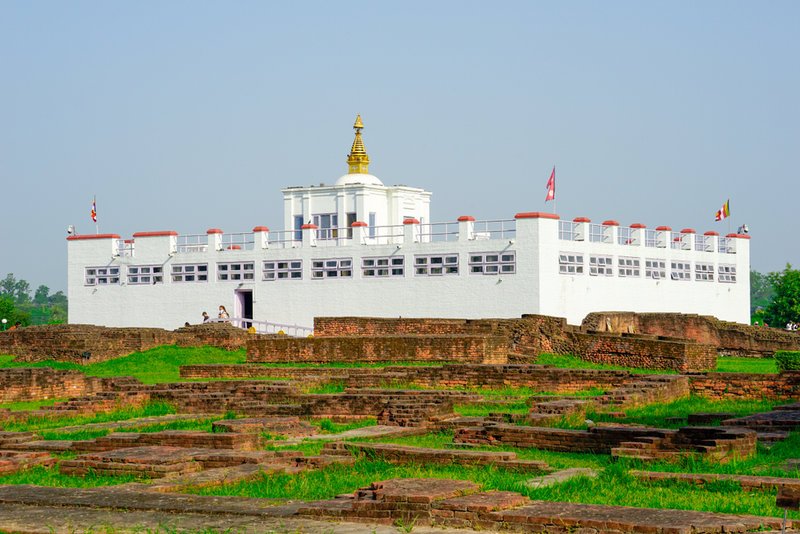
You can meditate here, you can also study Buddhism and see the monasteries that are made by different countries. The most important location here is Maya Devi temple, which is actually known to be the birthplace of Gautama Buddha. There are inscriptions on the Asoka pillar which mention the birth of Prince Siddhartha Gautama. This temple is very old and was built 2200 years ago. Its architectural view can make you wonder about the architecture and beauty of that time. The Lumbini Garden occupies a 2.56 square kilometer area where all kinds of people prefer to stay, meditate, and spend their time in spiritual activities.
Next time you plan a trip to Nepal, make sure you have a holiday trip to Lumbini.
Annapurna Base Camp Trek – Complete Package for Family
Nepal is a small and landlocked country. Nepal is an underdeveloped country rich in natural resources situated between the two most powerful and developed nations- India and China. As Nepal is a landlocked country and you cannot dream to sleep at the beach and flaunt your summer body. Despite that Nepal is still able to position itself as the second richest country in the world in terms of water resources. But more than water resources, Nepal is famous for the wide Himalayas complete package here. Nepal has been known for its massive mountain peaks in the world. Eight mountain peaks of Nepal are listed as among the top ten highest peaks in the world. It is the identity of the Nepalese.
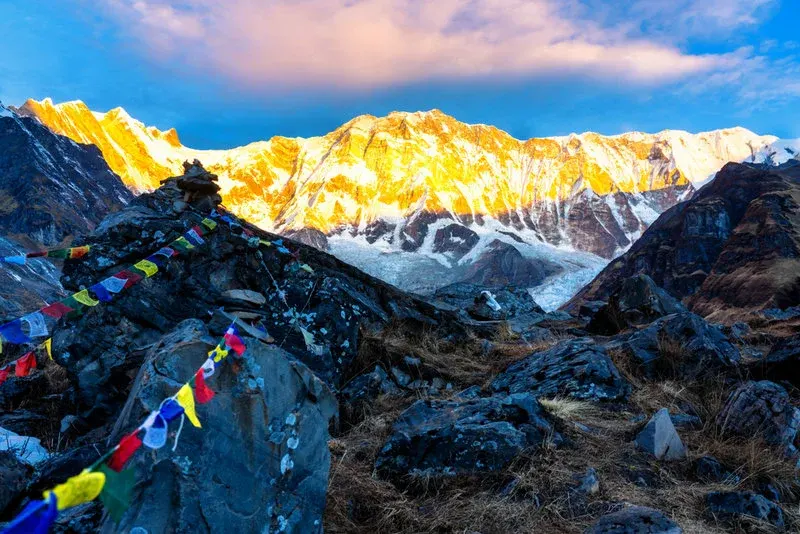
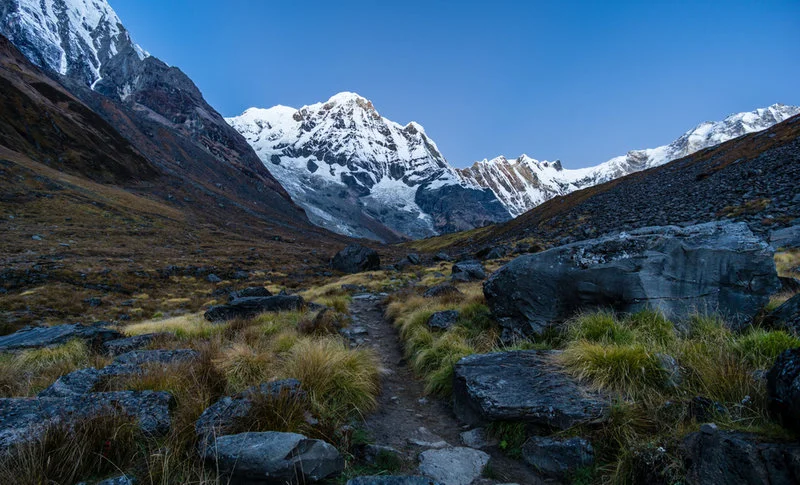
Out of the ten Himalayan ranges which consist of uncountable numbers of mountain peaks- highest and lowest, the Annapurna Himalayan region is one of them. Most of the people that intend to come to Nepal, usually plan to trek in this region. Along with the Everest base camp trek, the Annapurna base camp Trek is equally famous among tourists. The massive Himalayan view this region provides is irreplaceable and unexplainable. Whenever I try explaining the beauty and the view or the fee of being in this region, I always run out of enough adjectives.
Geography of Annapurna Base Camp
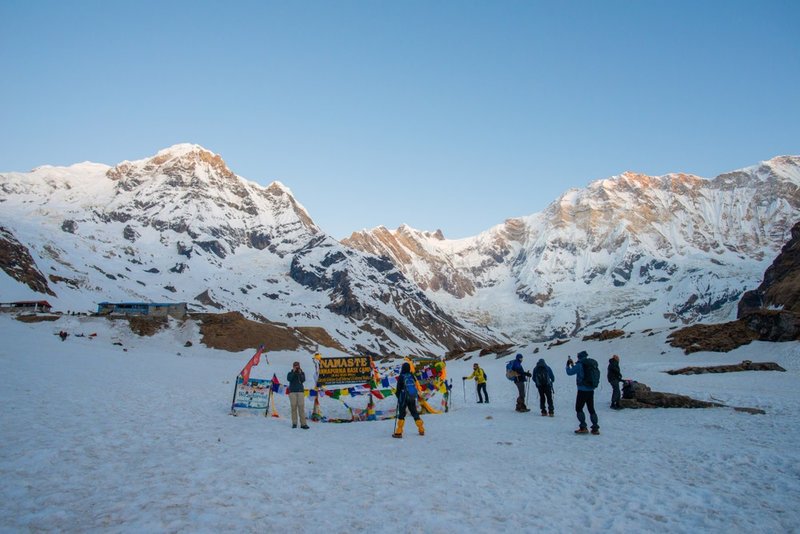
Annapurna base camp is 40 kilometers away from this region as it is situated in the northern part of the very famous tourist site of Nepal. Located 4,000 meters above sea level, this oval-shaped plateau is surrounded by a panoramic view of the ring of mountains, most of which exceed 7,000 meters in height.
The Annapurna sanctuary has so many ecosystems living there because of the fluctuating landscape where you can encounter heights and depths. Besides, the duration of the sun rays, touching its surface is only 7 hours as the base camp is surrounded by massive mountains from all sides. The north-facing slopes of this area are dry while the south-facing is a treat to watch with a rich sub-tropical forest of bamboo and rhododendron.
Annapurna Sanctuary
Along with being such a beautiful sight, the Annapurna sanctuary is believed to be a place of gods and goddesses. People believe that there is Lord Shiva’s home at the entrance to the Machhapuchhre Himal. Further, according to a popular mythological story, Sherpa and Tamang people believe that there are lots of gold and treasures in this range and it is their responsibility to secure it. It is as mentioned above a sacred place but as it is the entrance or doorway to the famous Annapurna base camp, the number of people exploring this sanctuary has increased gradually. Alongside foreigners, local people are also now into trekking and they explore this Complete Package too.
Complete Package Itinerary of ABC Trek
The details Annapurna Base Camp Trek Itinerary are as follows:
1st Day: Arrival at the Tribhuvan International Airport of Kathmandu
2nd Day: Kathmandu Drive to Pokhara (6-7 hours)
3rd Day: Pokhara Drive to Nayapul and Trek to Tikhedhunga (2,050 m), 5-6 hours
4th Day: Tikhedhunga Trek to Ghorepani (2,860 m), 6-7 hours
5th Day: Ghorepani Trek to Tadapani(2,600 m), 5-6 hours
6th Day: Tadapani Trek to Chhomrong (2,100 m), 4-5 hours.
7th Day: Chhomrong Trek to Bamboo (2,310 m), 5-6 hours.
8th Day: Bamboo Trek to Deurali (3,230 m), 5-6 hours.
9th Day: Deurali Trek to Annapurna Base Camp (4,130 m) via Machhapuchhre Base Camp (3,700 m), 5-6 hours.
10th Day: Annapurna Base Camp Trek to Bamboo (2,310 m), 6-7 hours.
11th Day: Bamboo Trek to Jhinu Danda (1,780 m), 4-5 hours.
12th Day: Jhinu Danda Trek to Nayapul (5-6 hours) and Drive to Pokhara (1:30 hours)
13th Day: Pokhara Drive to Kathmandu. (6-7 hours)
14th Day: Departure from Tribhuvan International Airport
Best Time for Annapurna Base Camp Trek
While reading the above paragraphs you must have wondered about the best season to get to Complete Package Annapurna base camp. I would strongly recommend you visit this base camp during the season of pre-monsoon and post-monsoon.
The pre-monsoon occurs during the month of Late February to May and while the post-monsoon occurs from late September to early December. Make sure you do not visit this place during monsoon because it receives more rainfall and it will act as a barrier to your successful trek.
Special Features of Complete Package
ABC Trek
As I already have said, whenever people plan to come to Nepal and plan for a trek, their two most common priorities are Everest base camp and Annapurna base camp. You also must be wondering about which base camp would be better for you to trek. Well, there must be some personal reasons as well but let me tell you some of the reasons why Annapurna Base Camp makes it a better place than Everest Base Camp Trek.
Why Choose ABC?
If you are a person who loves to enjoy not only the views of snow-capped mountain ranges but also loves to enjoy the landscape, forest, diversified flora, and fauna, then Annapurna base camp is for you. As you have to extend from the Annapurna Sanctuary, you won’t get the chance to know more about the lifestyle of people living near the mountains.
But the fact the sanctuary is a rich diversified place with some of the rare species in the world, such as bamboo and the rhododendron forest. So visiting this Complete Package during March and April will be more sensible as you will get to see the very beautiful rhododendrons adding color to not only the whole vista but also to your trek. You will widely get to see the national flower of Nepal, the rhododendron anywhere in the Annapurna sanctuary.
Other than that, the Complete Package of Annapurna base camp is also a place of preference for people who do not want to trek for longer days. The Everest base camp trek can take about 15 – 20 days while the Annapurna base camp trek will only last for 10 – 15 days. It might be very tiring for you as the landscape of the Annapurna base camp is quite strenuous. You will need some physical strength for the journey to Everest base camp, but no specific physical strength is required for the Annapurna expedition. Your willingness to reach the top is what drives you on this trek.
Annapurna Complete Package with Family
Annapurna base camp is suggested to a wide age group. A Kid of 7 years can also climb this mountain and an old person of the age below 80 years can also do this trek. Please do not start to think about the uric acid or cholesterol and think that I am lying. The age limitations are listed for a general case. Have you ever thought of going on a trek with all your family members..?? Not, this is the Complete Package magic of Annapurna base camp, in fact, the magic of Nepal. Our trips not only make you fall in love with natural beauty but bring your family and relations together.
For further inquiries, please feel free to contact us.
A Place of Pilgrimages in the Himalayas: Muktinath Temple
Being home to an 80% Hindu population, Nepal has always been known as a religious country. The country with the capital city which is already known as the city of temples holds a very old history and is rich in mythological stories and incidents. Muktinath Temple, Nepal has always been known as the oldest country in Asia. You will find spirituality in the nerves of the Nepali people.
A country rich in landscapes, and beautiful vistas, Nepal has a very beautiful and famous temple in a vast and arid valley, distinguished by eroded canyons, vividly colored stratified rock formations, and barren high-altitude deserts.
Introduction to Muktinath Temple
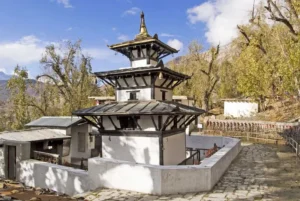
Situated at an altitude of 3710 meters above sea level, a popular Vishnu temple at the highest altitude in the world, Muktinath temple is a sacred place for both Hindus and Buddhists. It lies in the Muktinath valley which is at the foot of Thorang la Pass in Mustang, Nepal. This temple is close to the village called Ranipauwa but many people call it Muktinath mistakenly.
In terms of Hinduism, this temple is known as MUKTI KSHETRA, which means the place of liberation or MOKSH. It is the 108th SAKTIPEETH and is named Mahadevi. Similarly, in terms of Buddhism, it is known as the CHUMIG GYATSA, which means a hundred waters. Originally, the temple has a Vaishnava origin but it is also revered in Buddhism as the GURU PADMASAMBHAVA meditated there for a while. Buddhists believe that this is a place of dakinis, goddesses who are known as sky dancers. It is amongst the 24th tantric places.
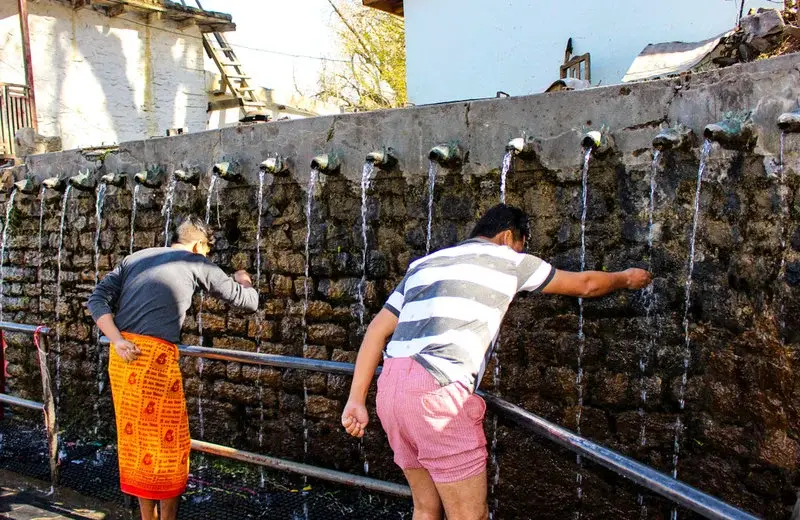
The central shrine of this temple is considered as the eighth-most sacred shines by the Hindu Vaishnavas. This central shrine is known as Svayam Vyakta Ksetras. The main statue or Murti of his temple is made up of gold and its height is as much as a normal man’s length. In the outer courtyard, there are 108 bull faces from which water is poured. This water denotes all the sacred Pushkarini waters from all the Sri Vaishnava Divya Dishams. People tend to take a bath here even in the cold. Bathing here is believed to clear all the sins done by a person. This water is considered to be holy and sacred. People are expected to offer a Prasad to the deity (food).
Story Behind The Muktinath
As I had already said this temple is the 108th Shaktipeeth. Shaktipeeth means the primordial cosmic energy that is formed by the body parts of the corpse of Sati Devi falling on it. In Muktinath, after the death of her beloved wife Sati Devi, Lord Shiva got mad and he carried her body in his arms, and roamed around. During that incident, the temple of the forehead of lord Sati Devi is believed to have fallen in Muktinath. The Shakti or power of Muktinath is known as Gandaki Chandi and Bhairava is known as Chakrapani.
This whole story of Sati Devi and Lord Shiva is really interesting and soothing. So is the structure of this temple. Mustang has become famous amongst the indoor tourist and the outer ones are also very keen to view its beauty. It is an alluring place in which you can barely see the other parts or districts of this country. You will find green hills or snowcapped mountains and plain land Terai but this place is different from others as it is like a plateau. It is located in the Himalayan region and is on the trail of Annapurna Circuit Trek. You will have a glimpse of mountains but being honest mustang is one of my fantasy holiday destinations and yes I am biased cause the beauty of this place can’t be put into words.
Nepali Custom and Etiquette: How Do Nepal People Greet?
Cultures in Nepal and Traditions of Nepal
NEPAL, a land full of cultures in Nepal national diversity and tradition carries a history of its own. Being the oldest country in East Asia, Nepal has many historical stories to tell and to be explored. A land that is serving as a home to 126 different ethnicities, each of them representing their own culture. 80% of the total population of Nepal has been occupied by Hinduism. That is why most of the traditions here are related to Hinduism while Buddhism is in the second position. A holy and where Lord Gautama Buddha was born. A place where the message of peace and togetherness originated. The birthplace of a Hindu deity goddess Sita.
Having a vast cultural difference even in such a small country is why Nepal is known for its diversity of cultures in Nepal. There still is peace and a feeling of respect for one another’s religion. We have never held a history of fights or conflicts in the name of religion. This land is a secular state and everyone has a right to live a life of his own.
As I have already said, Nepal is a secular country but most of the population 80% of the total population of Nepal follows Hinduism. The tradition, culture, and custom is mostly represented by Hinduism. Even in Hinduism, we have been divided into subgroups, caste, and ethnic groups. Each of us has a unique set of traditions in Nepal. The Newari people have some amazing traditions which will beautifully surprise you. Amongst the various other cultures in Nepal, Newari people make their daughters to marry with a fruit which is called “Bel”. The daughter was the attire like a bride and married to the bel. Gai Jatra is also a famous festival celebrated by them. It is usually celebrated by those Newari people who had lost their loved ones in that year. They dress weirdly and try to make others laugh. This tradition was initiated by Pratap Malla who wanted to make his queen realize the number of people who died in a year. The queen was sad and depressed after the death of her beloved son and this is what Pratap Malla did to cheer her up.
Food and Tradition Of Nepal
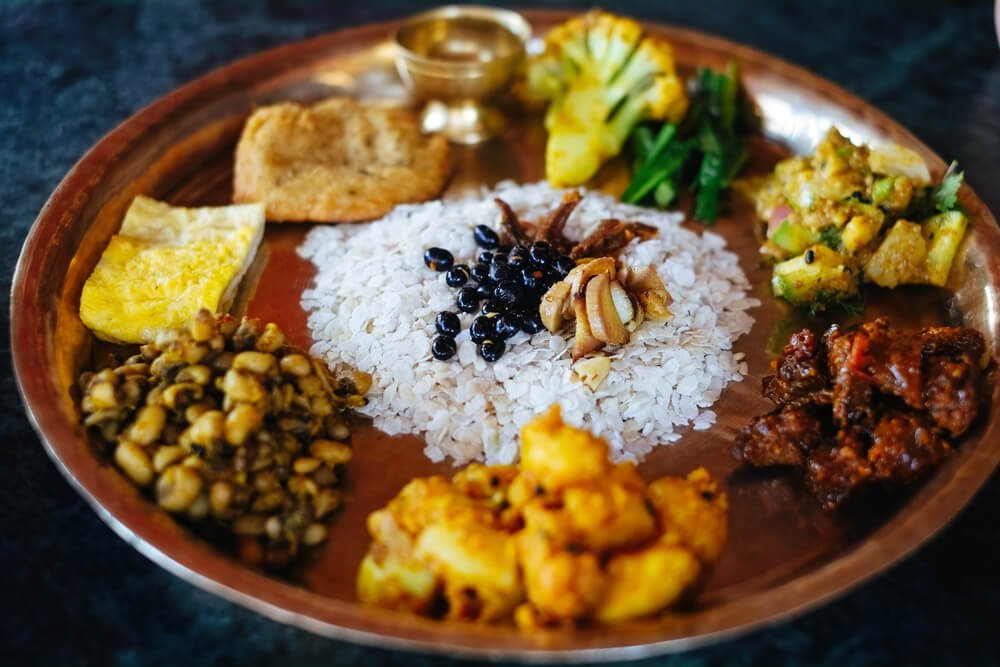
Many traditional or cultural stuff that Hindus follow in Nepal, might fascinate you. be the traditional costume they wear the traditional food they have, or any sort of festival they celebrate, it is very unique and is a fun experience to watch. It becomes more fun when you participate in one of those. The national costume of Nepal is Dhoti Cholo for females and Daura Suruwal for men representing by cultures in Nepal. Other than the national costume, many ethnic groups have their form of traditional attire which makes them look really gorgeous and appealing. The cuisines made by those ethnic groups are also something you can try when you come to Nepal. These cuisines have their own place of origin even in Nepal and they add a different flavor to your tongue. One of them is the Newari cuisine. Chatamari, Bara, and Choila are the major cuisines you can try. One of my personal favorites is choila which is simple barbequed meat but then some spices are added to it. The Bara is made from lentils and can be mixed with some eggs as well. The typical Dal Bhat Tarkari is the source of food and energy for most of the people of Nepal. The Momos are equally famous. You can try them in different forms and flavors.
Before coming to Nepal, you must learn some of the etiquette too. If you ever get invited to a Nepal house and cultures in Nepal, make sure you leave your shoes outside. Wearing shoes in the house is believed to be manner and especially in the kitchen, you cannot use slippers. Other than this, make sure that you do not wear very revealing clothes. Though many people are forward and do not mind seeing you that way I cannot guarantee about the judgment others are going to pass at you.
ETIQUETTES IN NEPAL
One of the main problems while traveling to a different location is communication problems. Most of the people nowadays are educated and they know English very well. But when you move towards the remote places it is going to be hard for you to communicate with people. As most of the people come to Nepal with the vision to climb the Everest base camp, you should learn some basic language so that it will help you to communicate with your porters and guide.
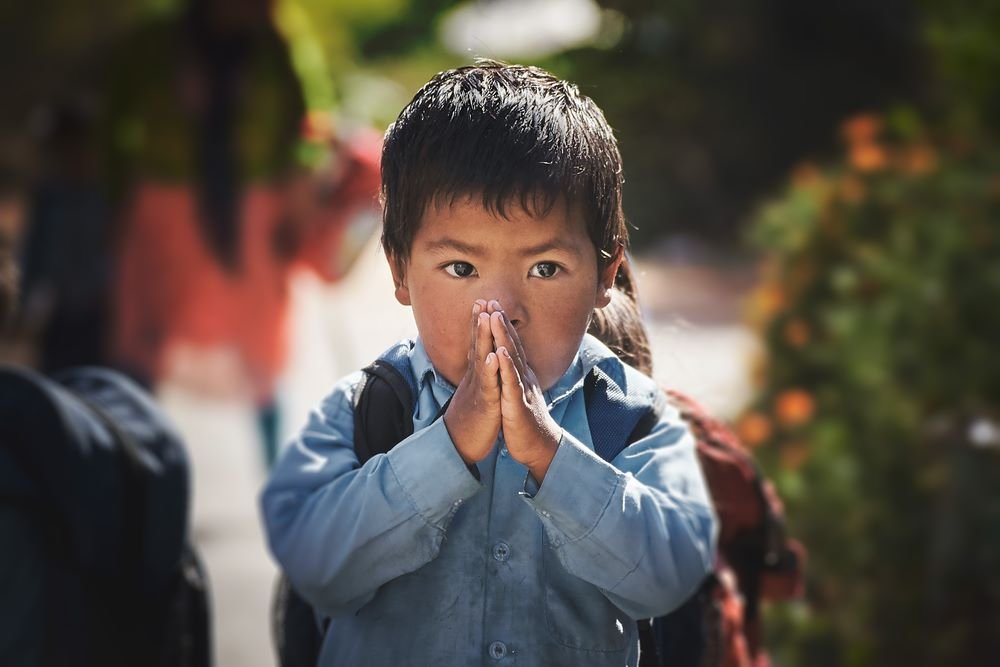
One of the famous ways to greet someone cultures in Nepal is by saying NAMASTE. It is usually said to say hello and goodbye to people around here. To do a Namaste, you have to join your two palms, bow your head, close your eyes and it is how you do it. Traditionally, the definition of Namaste is very interesting. ‘NAMA’ means bow, ‘AS’ means I, AND ‘TE’ means you which means I bow to you. In the spiritual understanding, Namaste is done to acknowledge of soul in one by the soul in another. The yoga gurus believe that there is a divine spirit in us and doing Namaste helps us to surrender our mind to the divine in us. This helps to increase the heart flow of divine love. We all are always protecting cultures in Nepal from generation to generation
A jungle safari Adventure does not have to be dangerous or something you need to have guts for. You still can go on an adventurous journey where you get to explore one of the best things you could have possibly experienced in your life. Not only mountains but the national parks are located in Nepal has a wide range of biodiverse flora and fauna some of which are the rarest species to encounter on this planet. Especially when it comes to wildlife photographers and jungle safari, the national parks of Nepal are a go-to destination.
NEPAL AND ITS FEATURES
Nepal has a wide range of adventurous stuffs and activities to explore. Its massive mountains, thick forest and diversifies landscape is what makes it a land full of adventures to try on. It is simply an amazing thing to know that a small country has so many things to offer. Travel sometimes tend to make you modest, it makes you realize who you are, how you should have been living and what you were missing all your life.
Be it jumping from a famous hill and fly like a bird above the sky of a beautiful city pokhara, be it hanging in between a swiftly flowing rivers and a suspension bridge in Bhote Koshi rivers, be it jumping from a plane above the highest peak in the world or viewing the beautiful scenario of the mountains, hills and lakes in Pokhara, Nepal has a big basket of adventures to experience and explore. You might have not though of living a life which you live when you are travelling in this country. you simply start regretting about why you never came to this place before and thank god that you are finally here otherwise you would have died without even experiencing and seeing the things you should have seen in your life.
NATIONAL PARKS IN NEPAL
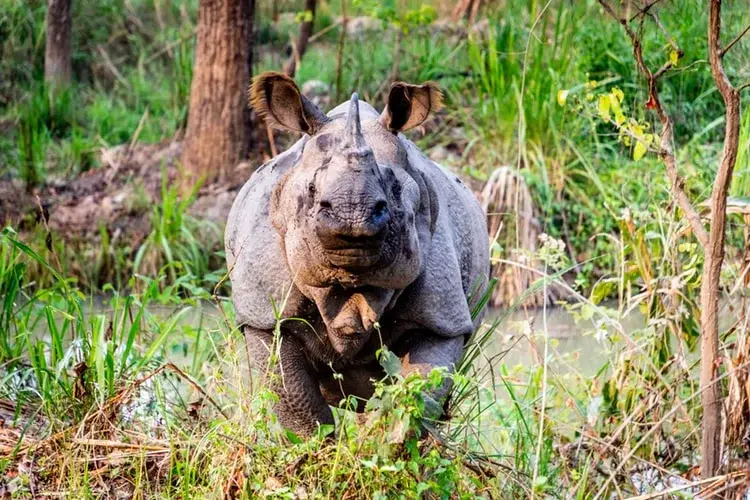
Other than the mountains and lakes, Nepal has a thick forest which consists of wide range of ecosystem and diversifies floral and faunal features. There are ten different national parks in Nepal, each of them serving as a home to some of the rarest species in Nepal. the Sagarmatha national park has the highest mountain peak in its territory, the Langtang national park has a holy and a sacred pond in its territory, the Bardiya national park is a home to one of the wildest creature on this planet- tiger, the Shivapuri Nagarjun has been protecting the very capital city of this small country, the Rara national park has the beautiful landscape of one of the remote places of this country, the Shey Phoksunda national park has a famous Ramsar announced lake in it while the very famous Chitwan national park is home to some of the rarest species on this planet –one horned rhinoceros and the royal Bengal tiger.
CHITWAN NATIONAL PARK: JUNGLE SAFARI
Though you can still enjoy the feel of jungle safari in the other nine national parks of Nepal but still people prefer Jungle Safari in Chitwan national park over all of them. The vast jungle which I surrounded by the Tharu community and the most beautiful floral and faunal features is what has made Chitwan national park, a destination for all the animal loving people.
Situated In the southern lowlands of Nepal, Chitwan national park is one of the UNESCO world heritage site present in Nepal and was the first national park ever declared in the country. In the area of 952.63 kilometers square, the Chitwan national park has been a home to a wide variety of fauna, mammals and birds. The Narayani-Rapti River forms a natural territory with the human civilization in Chitwan, giving the wild animals their own space and suitable habitat.
The grassland is an alluvial grassland and the forest is a subtropical moist deciduous forest. The fauna likes king cobra, python, monitor lizards, wild gharials are abundantly found in the Chitwan national park. Mammals like clouded leopard, sloth bear, four horned antelope, one horned rhinoceros, the king of jungle- Bengal tiger, Bengal foxes .the whole mammals, fauna and birds are accumulated to form a total of 700 species of wildlife in this national park. You can enjoy the feel of jungle safari watching at these amazing wildlife, sitting on the elephant where your security is assured and fun is going to be unlimited.
Top 10 Best Treks in Nepal – Best Trekking Destination in Nepal
Nepal is home to many breathtaking trekking destinations in the world. That’s why Nepal is also known as the trekker’s paradise. Every year thousands of trekkers come to Nepal to experience the thrill and the beauty Nepal has to offer. Trekking in Nepal gives the adrenaline junkies the element of adventure, thrill, beauty, and joy. Some of the trekking destinations in Nepal are ranked as the best treks in Nepal based on tourist interest and flow.
Nepal offers various trekking suitable for every kind of trekker. There are many challenging treks in Nepal that offers adventure to experienced trekkers and also easy trails with mesmerizing mountain views that boost the spirit of beginner trekkers.
In this article, we will provide you a list of our top 10 best treks in Nepal.
Best Treks in Nepal: Everest Base Camp Trek
Trip facts
Min. duration: 14 days
Max. elevation: 5,364 m / 17,598 ft(Everest Base Camp)
Start/finish: Lukla/Lukla
Trek difficulty: Challenging
Trek style: Teahouse
Overview
Everest Base Camp Trek is the most popular trek in Nepal and as well as in the world. Every year thousands of trekker visit Nepal for the Everest Base Camp Trail and most trekker has it in their bucket list. Being one of the best treks in Nepal, Everest Base Camp Trek is also considered as one of the best treks in the world.
Everest Base Camp Trek takes you to the base camp of the world’s highest mountain, Mt. Everest (8848m). Getting to the base camp is better experienced than explained. This Everest Trek takes us through the UNESCO World Heritage Site listed Sagarmatha National Park which is full of diverse flora and fauna and rich wildlife. Along with that, you will witness breathtaking views of some of the world’s highest mountains such as Everest, Nuptse, Lhotse, Cho Oyu, Ama Dablam, and Makalu.
You will walk through the beautiful Sherpa village where you can experience the culture and tradition of the Sherpa community. You will see colorful prayer flags festooned on suspension bridges, main walls, and spin prayer wheels.
Getting to the trailhead: a 30-minute flight Kathmandu to Lukla.
Best Treks in Nepal: Annapurna Base Camp Trek
Trip facts
Min. duration: 12 days
Max. elevation: 4130 m / 13,550 ft
Start/finish point: Nayapul/Nayapul
Trek difficulty: Moderate
Trek style: Teahouse
Overview
Annapurna Base Camp Trek is the second most popular trek in Nepal that takes you deep into the foot of Annapurna South. It is one of the best treks in Nepal that takes you through the classical trekking routes in Nepal. Annapurna Base Camp Trek is filled with a diverse landscape, rich flora and fauna, diverse culture, and breathtaking views of the Annapurna range.
Walking through dense jungles filled with rhododendron trees along with the beautiful mountain views is just extraordinary. You will trek to Annapurna Sanctuary which is a glacier bowl located below the Annapurna range. The view of the mountain is quite different from other classical treks in Nepal as the views are less expansive and more vertical. You find yourself looking almost straight up to see the mountains towering above you.
Furthermore, Annapurna Base Camp Trek is rich in culture. The Annapurna Region is mainly inhabited by Magar and Gurung ethnic groups with distinct cultures and traditions. It is also home to the brave Gorkha soldiers. Experience the warm hospitality of the local people and know more about the mountain culture in Nepal with this Annapurna Trek.
Getting to the trailhead: a 25-minute flight from Kathmandu to Pokhara, followed by a 2-hour drive; or an 8-hour drive from Kathmandu.
Best Treks in Nepal: Annapurna Circuit Trek
Trip facts
Min. duration: 12 days
Max. elevation: 5,416 m / 17,769 ft (Thorong La Pass)
Start/finish: Bhulbule/Jomsom
Trek difficulty: Challenging
Trek Style: Teahouse
Overview
Annapurna Circuit trek is considered as one of the best long-distance treks in the world. The Annapurna Circuit trail takes us through some of the most diverse terrains in Nepal. The trek starts from the hillside walking through dense forest and takes you to the arid hills near the majestic mountains.
One of the major highlights of this trek is crossing the Thorong La Pass (5416m) which is one of the highest mountain passes in the world. Along the trail, you will have picturesque views of Dhaulagiri, Annapurna Massif, and Manaslu. You will also witness the remote Upper Mustang and Tibetan plateau. Furthermore, you will hike to the Kali Gandaki gorge which is the deepest gorge in the world. Also, hike past the shrine temple of Muktinath which is of religious importance for both Hindus and Buddhists
Annapurna Circuit is a classical Himalayan trek but it has lost the feel of the classical trek due to the increasing popularity and especially due to road construction. Despite all that, the trek remains a great adventure with the crossing of the 5,416m Thorong La pass.
Getting to the trailhead: a 25-minute flight from Kathmandu to Pokhara, followed by a 2-hour drive; or an 8-hour drive from Kathmandu.
Best Treks in Nepal: Manaslu Circuit Trek
Trip facts
Min. duration: 13 days
Max. elevation: 5,106 m / 16,752 ft (Larkya La pass)
Start/finish: Soti Khola/Besisahar
Trek difficulty: Challenging
Trek style: Teahouse
Overview
Manaslu Circuit Trail is one of the best off-the-beaten-trail treks in Nepal, located in one of the most isolated and remote areas of Nepal. As the Manaslu region falls under the restricted area of Nepal, you require a special permit to trek in the region, and solo trekking is not allowed.
Manaslu Circuit trail takes you around the Manaslu conservation area and leads to a breathtaking view of the eighth highest mountain in the world. With the remarkable landscapes and rich biodiversity, Manaslu Trekking is one of the best trekking destinations in the untouched and unexplored part of Nepal. Along with the majestic views of the Himalayas, the trek is full of cultural diversity, ethnicity, beautiful natural scenery with high altitude glacier lakes, and enthralling flora and faunas.
The Manaslu Circuit trek is gaining popularity in the recent year as the trek has all the features you’d expect from a classic Himalayan trek—deep lush valleys at lower elevations, amazing views of 8,000m peaks, and a 5,000m+ pass crossing—all the while remaining largely unspoiled by visitors.
Although the trek is getting popular by the day, the Manaslu Circuit still exhibits very remote and has fewer trekkers than the more established classic treks of Nepal.
Getting to the trailhead: an 8-hour drive from Kathmandu.
Langtang Valley Trek is the best short trek in Nepal that lies very close to Kathmandu. Located just 68Km north of Kathmandu, Langtang trek is the fastest way to get to the lap of the Himalayas from Kathmandu. Langtang Valley is also known as the valley of glaciers as it consists of more than 70 glaciers of different sizes.
You will trek through Langtang national park which is the first Himalayan national park in Nepal. The trail is filled with diverse flora and fauna and rich wildlife. Along with that, the trek offers the breathtaking view of the majestic mountain peaks including Langtang Lirung, Langtang Ri, Dorje Lakpa, and Tserko Ri.
Along with the mountain views, the Langtang Valley trek offers great adventure in the Nepalese Himalaya with a unique cultural experience. The area is mostly inhabited by the Tamang community. Tamangs are the descendants of Tibetans who moved to Nepal ages ago. Thus, you will witness Tibetan culture and tradition and observe their daily lifestyles.
After having been devoid of travelers for a couple of years after the 2015 earthquake, the trails and guesthouses have been rebuilt, and trekkers are back.
The trek takes you through magnificent forests to the high alpine meadows and yak pastures around Kyangjin Gompa (a Buddhist monastery), with an optional day hike up to the top of Kyangjin Ri (peak).
Getting to the trailhead: a 7-hour drive from Kathmandu
Best Treks in Nepal: Upper Mustang Trek
Trip facts
Min. duration: 12 days
Max. elevation: 3810 m / 12,500 ft
Start/finish: Jomsom/Jomsom
Trek difficulty: Moderate
Trek style: Teahouse
Overview
The arid valley of the Upper Mustang Trek offers a unique landscape compared to almost all other treks in Nepal. Upper Mustang is an exotic trekking destination of Nepal that lies in the rainshadow area with an arid desert-like landscape. Thus, it resembles the Tibetan plateau. The best time to trek to Upper Mustang is during Summer/Monsoon. The Upper Mustang trek offers mesmerizing views of mountains like Nilgiri, Dhaulagiri, and Annapurna which I’m sure will leave you speechless.
Upper Mustang wasn’t open for tourists until 1992 and you need special permits to enter. The remote terrain and isolation for decades helped the region to retain its ancient culture and tradition. Immerse in the spiritual vibe of Upper Mustang. You will find the dominance of Tibetan Buddhism and can observe one of the best-preserved Tibetan Buddhism here. Visit the ancient caves, monasteries, chortens, and see rock paintings. Also, spin the prayer wheels, watch the prayer flag flutter in the wind, and hike past ancient Mani walls.
Getting to the trailhead: you’ll need to take two connecting flights: Kathmandu to Pokhara (25 minutes), and Pokhara to Jomsom (20 minutes).
Best Treks in Nepal: Everest Three Passes Trek
Fast facts
Min. duration: 18 days
Max. elevation: 5,535 m / 18,159 ft (Kongma La pass)
Start/finish: Lukla/Lukla
Trek difficulty: Challenging
Trek style: Teahouse
Overview
The Everest Three Passes Trek is an excellent chance to witness massive Himalayan ranges over 8,000 m including Mt. Everest, Cho Oyu, Lhotse, Makalu, and many more. The trek takes us through three 5,000m+ passes and is the best way to truly experience the Everest Region.
The trek not only takes us to the Everest Base Camp Trek but also offers even more spectacular views of the Himalaya as you cross the Renjo La, Cho La and Kongma La passes. The beautiful view from the passes almost knocks everyone off the knees. However, it is equally challenging.
Gokyo Lake trek is another trek in the Everest region that takes us to the beautiful journey to the enticing Gokyo Lakes. Just like the Everest Three Passes Trek, the Gokyo Lakes Trek shares significant sections with the classic Everest Base Camp Trek but takes you into a valley west of Everest. Its main attraction is the beautiful lakes at Gokyo, at around 5,000 meters. From there, trekkers can climb Gokyo Ri (5,357m /17,575 ft), a rocky peak with one of the best expansive views on Mt Everest.
Getting to the trailhead: a 30-minute flight from Kathmandu to Lukla.
Best Treks in Nepal: Mardi Himal Trek
Trip facts
Min. duration: 7 days
Max. elevation: 4,500 m / 14764 ft (Mardi Base Camp)
Start/finish: Kande/Sidhing Village
Trek difficulty: Challenging
Trek style: Teahouse
Overview
Mardi Himal Trek is a hidden gem of the Annapurna region that takes you deeper into the Annapurna region. The trek was officially opened for trekkers only in 2012 but yet it has become one of the most visited trekking trails in the Annapurna Region. The Mardi Himal trek provides us with the opportunity to get to the lap of the Himalayas within a short period. The trek offers beautiful views of snowy mountains like Mardi Himal, Dhaulagiri, Annapurna, and Hiunchuli.
The trek begins from the hillside villages and terraced farms and takes us through a dense forest that opens up to a ridge. A thrilling ridgeline walk overlooking majestic Himalayan views wakes up a photographer inside you. You can enjoy the stunning sunrises and sunsets over the Himalayas where the snowy mountains shine like gold.
Mardi Himal Trek is also culturally enriched. You will be passing through villages with different ethnic groups like Gurung, Ghale, and Brahmins. The trekking route is yet to touch by the streak of commercialization so savor the amazing trek when you can!
Getting to the trailhead: a 25-minute flight from Kathmandu to Pokhara, followed by a 1-hour drive; or 7 to 8-hour drive from Kathmandu.
Best Treks in Nepal: Kanchenjunga Base Camp Trek
Trip facts
Min. duration: 20 days
Max. elevation: 5,160m / 16,923ft (Pang Pema Base Camp)
Start/finish: Suketar/Suketar
Trek difficulty: Challenging
Trek style: Teahouse
Overview
Kanchenjunga Base Camp Trek is an adventurous trekking destination in Nepal for those trekkers seeking thrilling trekking holidays into some of the remote regions of Nepal. The major highlight of the trek, Mt. Kanchenjunga is the world’s third-highest mountain (8,586m) that lay the border between Nepal and Sikkim in India.
This trek is taken as one of the most daredevil destinations where you can explore both northern and southern base camp of massif Mt. Kanchenjunga. The trek is quite technical so there are very few trekkers seemed in the trail. But it is the best destinations to explore the unsoiled alluring villages and scenic views of an amazing landscape of the eastern region of Nepal.
Kanchenjunga base camp trek is one of the fascinating trekking destinations of Nepal which offers us the most beautiful landscape of the Kanchenjunga area. As being one of the most challenging trekking trails of Nepal it provides us an opportunity to observe the unspoiled traditional culture and lifestyle of local inhabitants.
Getting to the trailhead: a 35-minute flight from Kathmandu to Biratnagar, followed by a 20-minute flight from Biratnagar to Suketar;
Khopra Ridge and Khayer Lake Trek: Off The Beaten Trail Trek in Nepal
khopra ridge and khayer lake trek
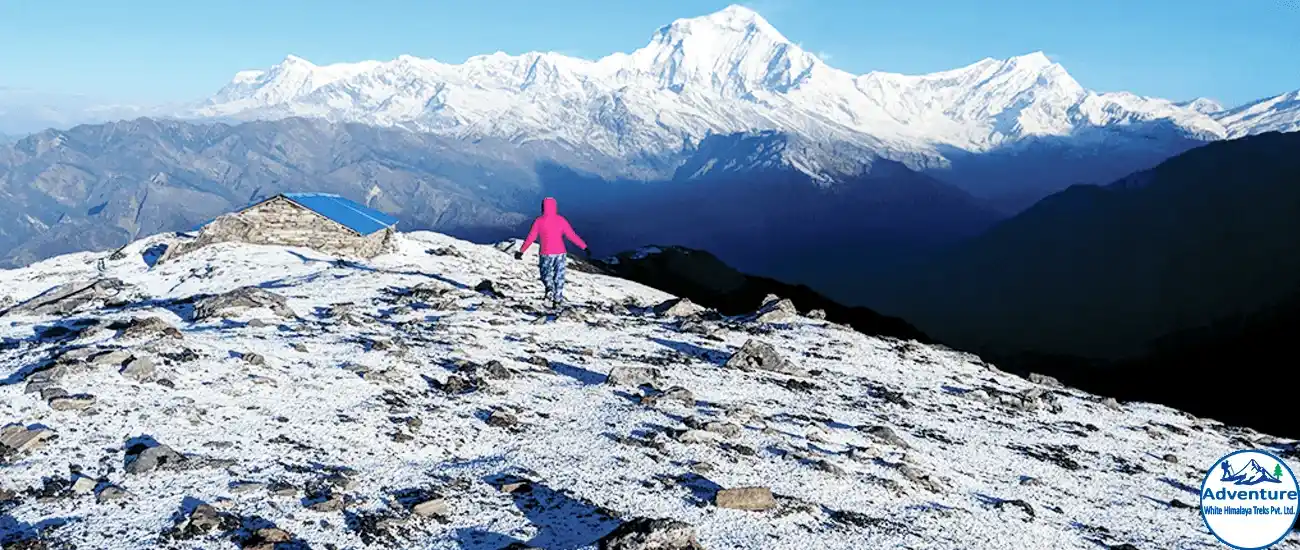
Khopra Ridge and Khayer Lake Trek are known as off-the-beaten trails in Nepal. Also known as Khopra Ridge Trek, the Khopra danda Annapurna region trek can be a great alternative to the very crowded and popular, Ghorepani trek. In this trek, you can undoubtedly experience the fascinating landscapes, Himalayas, biodiversity, and many others, as well as an enticing village route.
Populated by Gurung, Magar, Brahmin, Chhetri & many other ethnic groups, the villages exhibit diverse cultures, lifestyles, languages, and traditions.
Situated just between the two popular trekking destinations in Annapurna Region; Annapurna Base Camp and Jomsom-Muktinath trek, Khopra Ridge Khayer Lake trekking is a newly opened, off-the-beaten trail trek in the Annapurna region of Nepal.
On the other hand, this trek has attracted several trekkers to the unexplored trails to Khayer Lake offering the magnificent Himalayan vista. Besides, the Khayer Danda offers the best glimpses of unbeatable viewpoints.
Major Highlights of Khopra Danda and Khayer Lake Trek
The Pastoral villages
Handmade paper production
Cheese factories and Mushroom farms
Visiting Yak and Cow breeding farms
Explore the unexplored Khayer Lake, situated at 4600 meters
Explore different settlements witnessing the unique culture and languages of Magar, Gurung, Brahmin, Chhetris, and other ethnic people.
Incredible views of Mt. Dhaulagiri, Mt. Annapurna I, II, III and south, Hiunchuli, Mt. Fishtail, Mt. Lamjung Himal, and Mt. Nilgiri.
Trek to Khopra Danda Annapurna Region Trek
The journey starts by driving for seven hours precisely from Kathmandu to Pokhara. After you arrive in Pokhara, you will again be driven to Nayapool and the trek to Tikhedunga starts from there. The distance up to Tikhedhunga is about fifteen hundred meters and it will take four hours to reach there. The very next day, our destination will be Ghorepani. Further, the distance of twenty-eight hundred meters can be covered in seven hours.
Besides, Ghorepani is a village in the Myagdi District of the Dhaulagiri Zone situated in the northern central part of Nepal. Laying at an elevation of approximately 2874 meters, this village is situated seventeen kilometers from the district capital of Beni. Located within the Annapurna conservation area, the village contains several guesthouses that provide lodging and meals to mountain trekkers and also requires a national park permit to visit.
Journey From Ghorepani
Now from Ghorepani, we will trek up to Swata which is 2400 meters and take approximately four hours. Destined to go up to Dhankharka, we will wake up the next morning to walk for about four to five hours up to an altitude of 3000 meters. It will take us four hours to reach Khopra danda from Dhankharka which is at an elevation of 3660 meters and will take four hours to reach. Further, the next day will be more challenging cause we will have to walk up to 4600 meters to reach Khayer lake and return on the same day.
Finally, it is time for you to get rewarded after a long walk. As you reach Khayer lake, you will get rewarded with some amazing mountain vistas in the entire Himalayas range. You will get to walk some remote forest trails that very few trekkers know about.
Now back to the journey, we will head up to Dobato. It will take seven hours to cover the distance up to 3425 meters.
Unfortunately, you couldn’t enjoy the sunrise from Sarangkot, but you will get a much better view from Ghandruk. Moreover, we will walk for about six hours to reach Ghandruk located at an elevation of 2000 meters. There we will enjoy the very great sunrise and we will be back to Nayapul trek and back to Pokhara.
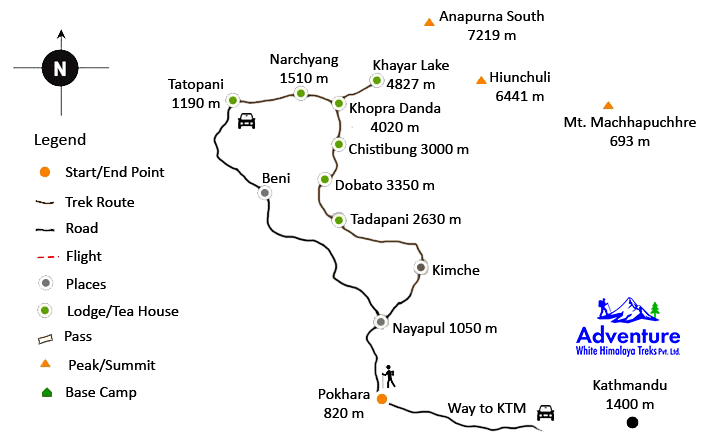
Khopra Ridge and Khayer Lake Trek Map:
Khopra Ridge and Khayer Lake Trek Itinerary:
1st Day: Arrival at Tribhuvan International Airport (1,300 m)
2nd Day: Kathmandu valley sightseeing or trekking equipment preparing
3rd Day: Kathmandu Drive to Pokhara 6 hrs. of driving
4th Day: Pokhara Drive to Nayapul (1,050 m) then trek to Tikhedhunga (1,570 m) 4 hrs. of trek
5th Day: Tikhedhunga Trek to Ghorepani (2,840 m) 6 hrs. of trek
6th Day: Morning Hike to Poon Hill (3,210 m) and trek to Sauta village (2,200 m) 5 hrs.
7th Day: Sauta village Trek to Chistibung (3,000 m) 5 hrs. of trek
8th Day: Chistibung Trek to Kopra Ridge (3,870 m) 4 hrs. of trek
9th Day: At Khopra Ridge for local exploration and hike to Khayer Lake (4,620 m).
10th Day: Khayer lake Trek to Dobato (3,420 m) 5 hrs. of the trek
11th Day: Dobato Trek Ghandruk villages (1,950 m) 6 hrs.
12th Day: Ghandruk Trek to Bhirethati 4 hrs. of the trek and drive to Pokhara (860 m) 2 hrs. drive
13th Day: Pokhara Drive back to Kathmandu 7 hrs. of drive
14th Day: Final departure day transfer to Tribhuvan International Airport
For those who want to explore off the beaten trail trek along with ethnic villages, see wildlife, breathtaking snow-capped mountains, beautiful landscapes adorned with alpine forests, and the local culture of people then this Khopra Ridge and Khayer Lake trekking is for you.
Everest Base Camp Trek Guide: Everything You Need To Know
Everest Base Camp Trek Guide is one of the most adventurous trekking routes in the Himalayas of Nepal. Since Mt. Everest is the tallest mountain in the world, trekking to its base camp is exciting and arduous at the same time. Sir Edmund Hillary and Tenzing Norgay Sherpa were the first people to ascend the summit of Mt. Everest on 29th May 1953 AD. You have the chance to take the same epic trek that Tenzing Norgay and Sir Edmund Hillary took in 1953 A.D. by trekking to Everest Base Camp. Every travel enthusiast, adrenaline seeker, explorer, and environment lover among us has this trek on their bucket list.
The Everest Region, widely known as the Sherpa heartland, is situated in the gorgeous Solukhumbu region. The Everest Base Camp Trek is abundant in Himalayan panoramas, which include well-known mountains such as Mt. Lhotse, Mt. Nuptse, Mt. Pumori, Mt. Changasto, Mt. Lingterin, Mt. Amadablam, Mt. Thamserku, Mt. Kantega, Mt. Kusum Khagaru, Mt. Kongde, Mt. Khumbila, Mt. Tawache, Mt. Cholaste, Island Peak, Lobuche Peak, Pokalde Peak, Honku South Peak, and a lot more. You can also see a variety of high-altitude animals, including Musk deer, Jackals, and Himalayan Tharal Birds like Pheasants.
Everest Base Camp Trek Route:
For our devoted customers, Adventure White Himalaya has created this traditional 15-day Everest Base Camp Trek Package. The journey begins with a direct flight from Kathmandu to Lukla, one of the world’s most dangerous airports. The inviting Sherpa settlement of Namche Bazaar will then greet you as you continue hiking in the direction of Tyangboche Monastery. After that, you’ll keep walking till you reach Dingboche. You spend a day here getting acclimated to the environment. You will arrive at Lobuche and then Gorakshep after another six hours of trekking. Your Everest Base Camp Trek is successful if you start out early and trek to Kalapatthar (5545m). The experience of arriving at Mount Everest’s base camp will be extraordinary and undoubtedly give you chills.
Everest Base Camp Trek Facts:
Trip Starts: Kathmandu
Trip Ends: Kathmandu
Transportation Facility: Plane or Road
Trip Duration: 15 Days
Trip Activity: Trekking
Trekking Guide: Available (Male)
Best Season: Spring and Autumn
Min-Max Group Size: 2-20 pax
Min age: 12 years or above
Everest Base Camp Trek Highlights:
Scenic flight to Lukla Airport
Visit Sagarmatha National Park; a UNESCO World Heritage Site
Explore Sherpa Culture and their dishes
Breathtaking Mountain Views
Witness the Khumbu Glacier, which is Nepal’s largest glacier
Visit Hillary Museum on acclimatization day
Everest Base Camp Trek Itinerary:
Day 01: Arrival in Kathmandu (1,300 m)
When you arrive at Tribhuvan International Airport, a representative from our company will greet you. Once you exit the arrival terminal hall, please search for the person holding a sign featuring your name and the words “Adventure White Himalaya Treks.” You will be brought to the hotel by our agent after retrieving your luggage. When you arrive at the hotel, staff will give you a room key so you may change and take a rest.
Day 02: Sightseeing around Kathmandu and preparation for the trek
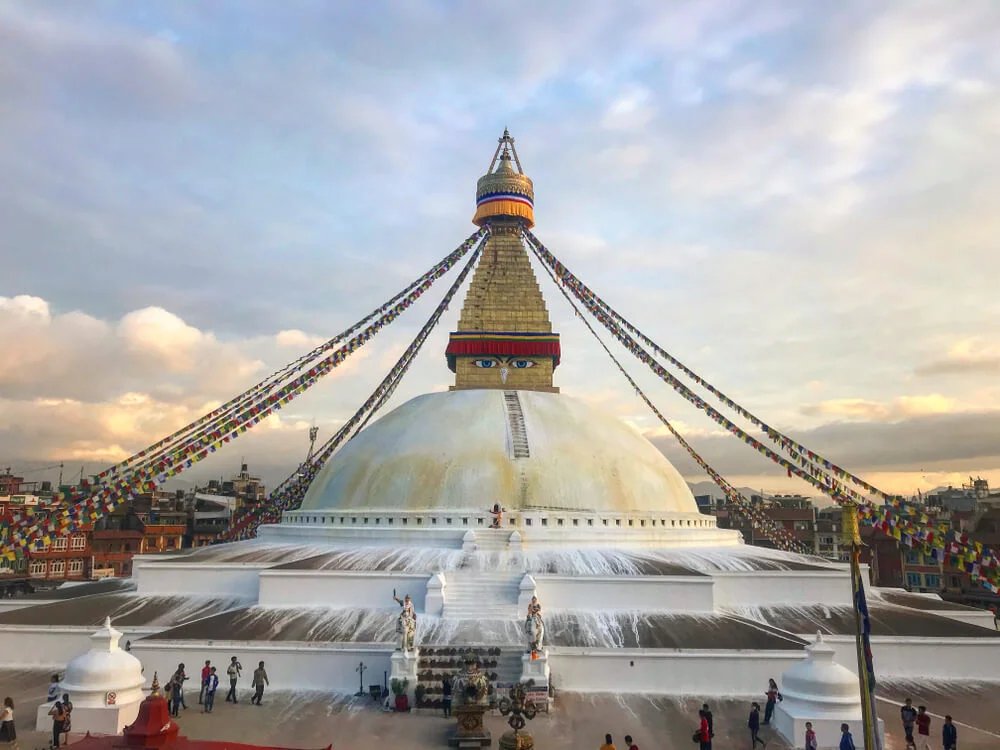
Following breakfast, you have two options: One is that you can purchase trekking supplies or equipment at Thamel if you don’t already have any before embarking on a city tour. If you have all you need for trekking, we will give you access to a private automobile so you may tour the Kathmandu Valley. The three most important sites in Kathmandu Valley—are Kathmandu Durbar Square, Patan Durbar Square, Pashupatinath Temple, Swayambhunath Stupa, and Boudhanath Stupa—are typically visited on a tour.
Day 03: Fly to Lukla Airport (2,840 m), and trek to Phakding (2,650 m)
You will be driven from your accommodation to the airport in Kathmandu this morning to catch a domestic aircraft to Lukla. It takes about 40 minutes to fly to Lukla. We travel northwest on a broad track from Lukla to the Dudh Koshi valley town of Cheplung. Walking today is simple. As we travel along the river, we pass past the Ghat village. We will descend till we reach Pakhding, a little settlement, which is where we are going.
Overnight stay at a teahouse in Phakding
Day 04: Phakding to Namche bazaar (3,440 m)
The track takes us through a lovely pine forest and over suspension bridges along the Dudh Koshi River. Then, after passing through the communities of Banker, Chumoa, and Monjo, we arrive at the checkpoint and entrance to Sagarmatha National Park. First, we get a spectacular view of the gleaming Mt. Thamserku (6,618 m). In order to get to Namche Bazaar, we had to pass via the final settlement of Jorsale.
Overnight stay at a teahouse in Namche Bazar
Day 05: Acclimatization rest at Namche bazaar (3,440 m)
We will stop by the visitor center and the Sherpa Museum in the morning. You may see an intriguing exhibition about Sherpa life and culture, a wealth of details about the local flora and fauna, and a display about the development of climbing in the Khumbu.
Overnight stay at a teahouse in Namche Bazar
Day 06: Namche Bazaar to Tyangboche (3,860 m)
Today, we leave the hamlet and travel up a somewhat level path above the Dudh Koshi while taking in the magnificent mountain views of Everest, Nuptse, and Lhotse. We proceed past the different Tibetan-run stores selling gifts and descend through a Blue Pine forest to Phunki, where we cross the Dudh Koshi once more (3,250 m). From there, we travel to Tengboche Monastery (3,867 m), from where we get stunning views of Thamsarkhu and Kantega to the north and northeast, as well as Everest, Lhotse, Nuptse, Ama Dablam, and Taboche.
Overnight stay at local lodge in Tyangboche
Day 07: Tyangboche to Dingboche (4,410 m)
We begin our trek by descending through a rhododendron forest to the Imja River, where we cross it on an exhilarating bridge. We’ll stroll by a substantial mani-stone wall as we approach the Pangboche hamlet. To get to the Dingboche, we continue through the summer pasture.
Overnight stay at a teahouse in Dingboche
Day 08: Acclimatization at Dingboche (4,110 m)
Acclimatization at Dingboche will be a memorable day. There are some mesmerizing views of the Lhotse-Nuptse ridge and the North Face of Ama Dablam. You can take in the panoramic views of Ama Dablam, Makalu, Tawoche, Lhotse, Nuptse, Island Peak, and others as you travel roundtrip through this lovely valley.
Overnight stay at a teahouse in Dingboche
Day 09: Dingboche to Lobuche (4,910 m)
We reach Dusa today after our walk, from which point we descend to a creek at 4,580 meters. We arrive at the teahouse of Dughla immediately above, where we can see a ridge with numerous tributes to Sherpas who perished during an Everest trek. To get to Lobuche, which is at 4,930 meters, we continue down the Khumbu Glacier’s moraine while enjoying views of Kalapatthar and Pumori.
Overnight stay at a teahouse in Lobuche
Day 10: Lobuche to Gorakshep (5,180 m); visit Everest Base Camp (5,364 m), and back to Gorakshep
Given that we are leaving so early, you will have a long and difficult day. We will be walking for almost three hours to get to Gorak Shep as we follow the Khumbu glacier northward. We’ll eat lunch and take a nap after we reach Gorakshep. After crossing the sand flat at Gorak Shep, we spend a few hours ascending into the Khumbu glacier’s lateral mothering before ultimately entering the stony glacial moraine itself. To reach the location referred to as Everest base camp, the trail ascends and descends through the amazing ice. We stroll back towards Gorak Shep, where we spend the night, after taking in the scenery.
Overnight stay at a teahouse in Gorakshep
Day 11: Early Morning trekking to Kalapatthar (5,545 m), and returning back to Pheriche (4,240 m)
Our big day is today. We go early in the morning to watch the breathtaking sights of Mount Everest as the sun rises above Kalapatthar (8,848 m).
However, we must first prepare for an early-morning departure in the dark and the chilly weather. Additionally, there is always a chance for brisk gusts that are very cold. Lengthen Khumbu tower, a well-known choice, can be seen to the east when Everest beings emerge between the west shoulder. When we reach the summit, marked by cairns and prayer flags, we scramble to scale the rocky outcrop nearby. We take a seat on the Kalapatthar rock, gazing out at the breathtaking Himalayan landscape and moving from one impressive peak to another. We go back to Gorak Shep for breakfast, go back the same way for lunch, and then keep going till we reach Pheriche.
Overnight stay at a teahouse in Pheriche
Day 12: Pheriche trek to Namche Bazaar (3,440 m)
Today’s trip to the lower elevation of Orsho and Shomare is simpler than the climb to Kalapatthar the day before. After Shomare, an alternative route might be taken if we want to go to the Gompa in Upper Pangboche. We go back the way we came, through the forest to Dingboche, and down to the Imja Khola. On our way through Pangboche, Tyangboche, Phunki Tenga, Kynguma, etc. before arriving at Namche Bazaar, we will pass through a lovely village. Along with us, the Himalayan views will remain unchanged.
Overnight stay at a teahouse in Namche Bazar
Day 13: Namche bazaar to Lukla
From Namche to Phakding, the trail is primarily downhill. From Phakding to Lukla, the terrain is all gradually ascending. We will get to Phakding after traversing a number of stunning suspension bridges, lush forests, and high cliffs. The majority of the trials up until Lukla will be uphill after eating at Phakding. We shall arrive in Lukla at last.
Overnight stay at a teahouse in Lukla
Day 14: Fly back to Kathmandu
You will depart from the airport in Lukla in the early morning for a breathtaking mountain flight back to Kathmandu. You will meet our agent when you arrive at the domestic terminal of Kathmandu airport, and they will drive you to your accommodation.
Overnight Stay in a hotel in Kathmandu and also have your goodbye meal at a local restaurant
Day 15: Final Departure
Today marks the end of the trek to Everest Base Camp. For your flight out of Nepal, our airport agent will drop you off at Kathmandu’s international airport.
Everest Base Camp Trek Food and Accommodation:
The Everest Base Camp Trek is one of the most well-developed treks in Nepal. There are numerous teahouses along the routes leading to Everest Base Camp. All of the cozy tea houses provide a variety of meals and cozy lodging. However, they only provide a small selection of food on the menu due to the remote, high-altitude terrain. However, the food served at the tea houses is wholesome and keeps you refreshed for the strenuous hike. The locals will treat you with great hospitality and top-notch food service. You’ll be heartened by the Sherpa community’s friendliness.
Rice, cereals, and other non-perishable ingredients are therefore widely used in the area. Dal, a cooked lentil soup, is another option. White steamed rice is served with these dishes. All around Nepal, people eat the popular combination dish known as “Dal Bhat.” Most tea houses sell bottled water, but it is extremely pricey. To prepare tea, coffee, and other applications, the tea shops boil water from the nearby stream. There are many water purifying pills and chlorine treatments available if you don’t want to drink bottled water.
The tea houses along the Everest Base Camp route provide twin-sharing accommodations. The majority of teahouses offer twin bedrooms with some furniture. A pillow and a cozy blanket are also included. Along with the teahouses, there are simple bathrooms and squat toilets. Overall, the accommodations are rather basic but more than adequate for a nice stay.
Best Time for Everest Base Camp Trek Guide:
Trekking to Everest Base Camp is an exciting experience you’ll never forget. Therefore, you must be aware of the best time of year to trek to Everest Base Camp if you want to get the most out of this expedition. The Everest Base Camp Trek, however, may be undertaken at any time of the year. Every season offers benefits and drawbacks. So, the best time to trek to Everest Base Camp depends on the type of trekking experience you want.
Spring (March-May)
One of the greatest seasons to trek to Everest Base Camp is spring. Early March marks the beginning of spring, which lasts through May. The weather is consistent and dry during the spring, making it ideal for trekking and high-altitude hiking. Indeed, the days are sunny and bright, and the sky is a deep blue, giving you a magnificent view of the mountains and the surroundings. Due to the consistent weather, it is the busiest and best season for trekkers.
Autumn (September-October)
The Everest Base Camp Trek is the best and most successful in the autumn. During autumn, days are very clear and the weather is moderate, except for the nights which are quite chilly. Unusual snowstorms can happen occasionally during this time of year. Due to the perfect weather, this season attracts more trekkers to Everest Base Camp than any other. Pre-ordering is therefore required, especially for Everest Flights and Accommodation.
Winter (December-February)
Although the winter months will be the coldest at Everest Base Camp, it is still possible to trek there during this time. On the road, there will be a significant snowstorm, and it will be bitterly cold. At high altitudes, the temperature can drop to -30°C at night. So it’s crucial to pack the right equipment.
In addition, winter is the greatest time to trek if you want to avoid crowds and prefer quiet surroundings because there are so few trekkers there.
Summer (June-August)
The summer season is nothing but a season of rain. The trails are slippery with leeches. In addition, the views of the mountains are obscured by the heavy rain. Therefore, this is the least popular trekking season in Nepal.
Everest Base Camp Trek Permits:
Everest Base Camp is situated in the protected zone inside the Sagarmatha Region. Therefore, every expedition within this territory requires an entry permit. The Sagarmatha National Park Permit and the Khumbu Rural Municipality Permit are two notable permits for EBC Trek. For the Everest Base Camp Trek, the Trekkers Information Management System (TIMS) is no longer required. In its place, the Khumbu Rural Municipality Permit is now given.
Khumbu Rural Municipality Permit
The Khumbu Rural Municipality Permit is required for trekkers to access the Sagarmatha Region and is provided only by the local Khumbu government. This permission costs between $15 and $20 per person. To obtain the Khumbu Pasang Lhamu Rural Municipality Entrance Permit, you must have a copy of your passport or the passport’s information with you. Further, VAT is not applied to the permit fees.
Sagarmatha National Park Permit
Sagarmatha National Park Permit can either be issued at Monjo at the entrance gate or at the Department of National Park and Wildlife Conservation (DNPWC) counter in Bhrikuti Mandap in Kathmandu. The Sagarmatha National Park Permit costs NPR 3000 for foreigners, NPR 1500 for SAARC Nationals, and NPR 100 for Nepalese citizens per person. All these prices are exclusive of VAT which is 13%.